
Caching of dynamic content is difficult and invalidation of cache even more difficult. Maybe you already heard Phil Karlton’s wise saying:
There are only two hard things in Computer Science: Cache invalidation and naming things.
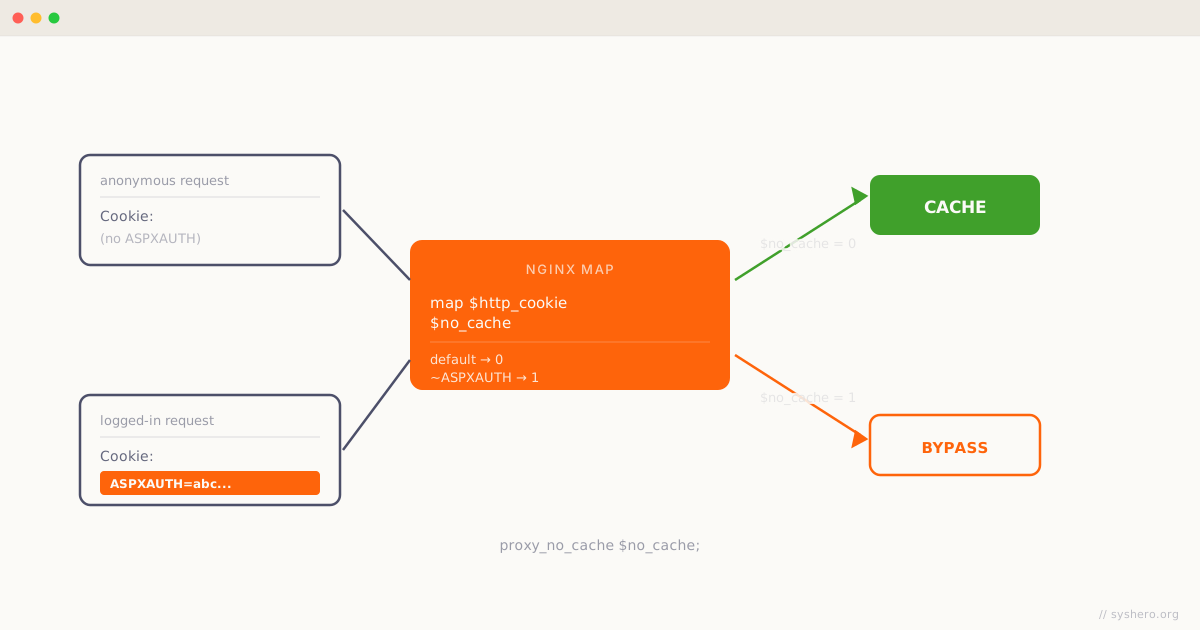
If you have one situation when you need to disable caching, after the client logs in on the application, and this application uses cookies to track logged-in users, you can use the map directive.
For example .NET applications, when using the default configuration, will use the cookie named .ASPXAUTH to track if a user is authenticated.
Using proxy_cache_bypass, proxy_no_cache and map will let us disable caching for logged-in users while still keep the cache for anonymous users.
I have added a simple configuration snippet to show how it works, first we need to add a map definition with the desired cookie:
map $http_cookie $no_cache {
  default 0;
  ~ASPXAUTH 1;
}
And using the return value from the map previously defined, disable caching for it using proxy_no_cache
location / {
  ...
  proxy_no_cache $no_cache;
  ...
}
See you next time!
EDIT 2026-04-24. Removed two links to a companion post on caching zero-byte responses; I retired that post after a 2026 technical review (the $upstream_http_content_length approach it described didn’t catch chunked-empty responses, so the advice was misleading for most real-world cases).